
Dar es Salaam Independent School is a Cambridge (Primary) / Cambridge (Secondary) / Cambridge IGCSE / Cambridge International AS Levels / Cambridge A Levels / BTEC Qualification school in Dar es Salaam, Tanzania. Founded in 1996. Annual tuition ranges from $577 to $4,308 USD.
Location & Getting There
NanaSays Scorecard
Key Details
Academic Performance
Key facts
About
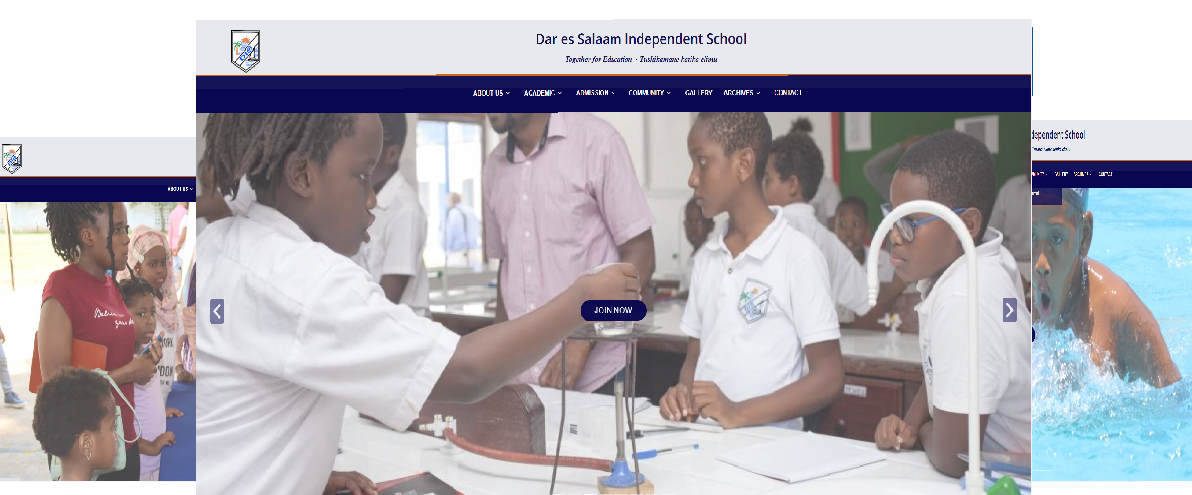
Dar es Salaam Independent School (DIS) is a co-educational, English-medium international day school founded in 1996, operating across two campuses in Dar es Salaam — Mikocheni for Early Years and Primary, and Mbweni for Middle through Sixth Form. The school follows the Cambridge Assessment International Education framework from primary through A-Levels, supplemented by Edexcel BTEC, and teaches Kiswahili as a subject of equal value to English alongside up to seven additional foreign languages. With a 98% university progression rate and accreditation by Cambridge and Edexcel, DIS prepares its multicultural student body of approximately 752 pupils, aged 2 to 18, for admission to universities worldwide.
School data verified by NanaSays. Last updated: April 2026.
Why Families Choose
DIS offers an international Cambridge-based bilingual programme (English and Kiswahili) across two purpose-specific campuses. The school combines Cambridge IGCSE, AS/A Levels and Edexcel BTEC with a strong multilingual offering (up to 8 languages taught). It has a professional team of teachers, psychologists and methodologists, a multicultural community, and a 98% university progression rate. Extracurricular highlights include DAR MUN and the World Scholar's Cup.
Fees & Financials
| Grade / Year | Annual Fee |
|---|---|
| Reception / Rising 5 | TZS 3,115 |
| Years 1–6 (Primary) | TZS 3,769 |
| Form 3–Form 6 (Upper Secondary) | TZS 4,923 |
| Years 7–Form 2 (Lower Secondary) | TZS 4,308 |
Conversions to USD use exchange rates as of April 2026.
Original currency: TZS 1,500,000 - 11,200,000. Application fee: $577.
Admissions Process
- 1Five-step process: (1) Complete the DIS Application Form; (2) Submit application with admission fee and required documents (Progress Report, Birth Certificate copy, Passport Photo, Leaving/Transfer Certificate) via bank transfer; (3) Placement assessment — parent/guardian contacted for assessment to determine readiness, English language needs, and any special needs support; (4) File forwarded to Admissions Committee for review and decision by the relevant Deputy Head Teacher or Head of Secondary; (5) Outcome notified — Accepted, Provisionally accepted, Conditionally accepted, Waitlisted, or Denied.
Admissions Details
Waitlisting is a possible admission outcome when no space is available. Students may be waitlisted pending a vacancy.
Student Life
The school uses a house system; PE t-shirt colours are assigned by house after registration.
All students wear white shirts/t-shirts with the school logo. Primary students wear black shorts or pinafore dresses; secondary students wear tailored black trousers or skirts. Closed or semi-closed shoes required. Jewellery restricted to ear studs for girls only; boys may not wear earrings. Hair must be simple and undyed. PE t-shirt colour is assigned by house after registration.
Facilities & Programmes
Wellbeing & Safety
DIS maintains a welfare-focused environment with a professional international team including psychologists and school counsellors. The curriculum includes opportunities to develop self-awareness, self-esteem, assertiveness and decision-making. Staff receive annual safeguarding training and Designated Child Protection Officers coordinate welfare across campuses, involving counsellors as appropriate.
The school has a Child Protection Policy with Designated Child Protection Officers (DCPOs) for Primary, Secondary and Early Years. Staff receive annual training. The policy covers recording, reporting and referral to outside agencies, confidentiality, parent liaison, health and safety, risk assessments, safe recruitment, anti-bullying, and peer-on-peer safeguarding. Students with SEND are given particular attention under the safeguarding framework.